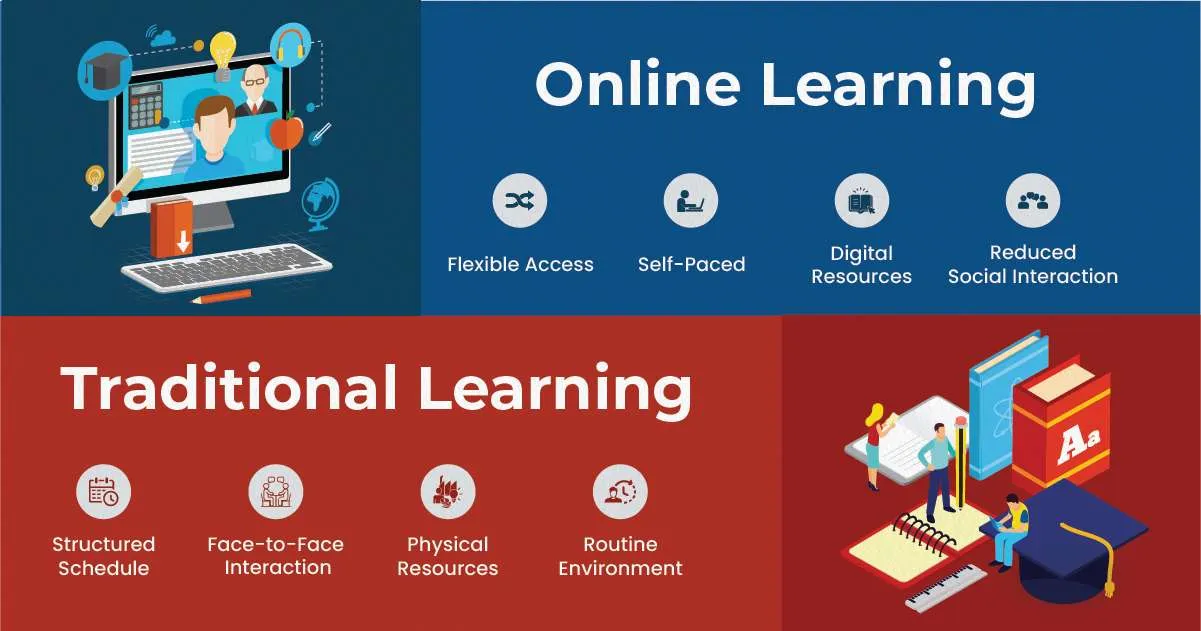
In today’s rapidly evolving world, education has transformed dramatically. Students and professionals now have two primary pathways to learning: online education and traditional (on-campus) education. Both offer unique benefits and challenges, and choosing the right option can significantly impact your academic success, career prospects, and personal growth. This article provides an in-depth comparison of online and traditional education across multiple dimensions.
1. Definition and Overview
| Mode | Description |
|---|---|
| Online Education | Courses, degrees, and certifications delivered via digital platforms, accessible from anywhere with an internet connection. |
| Traditional Education | In-person learning at schools, colleges, or universities with direct interaction with instructors and peers. |
Tip: Online education is increasingly recognized by employers, while traditional education remains a staple for networking and hands-on experiences.
2. Flexibility and Scheduling
| Aspect | Online Education | Traditional Education |
|---|---|---|
| Class Schedule | Self-paced or scheduled online sessions | Fixed schedule with in-person classes |
| Location | Learn from anywhere | Must be physically present on campus |
| Work/Life Balance | Highly flexible, ideal for working professionals | Limited flexibility, may require full-time attendance |
| Pace of Learning | Students can progress faster or slower depending on ability | Standardized pace for all students |
Insight: Online education excels in flexibility, allowing learners to balance work, family, and studies.
3. Cost Comparison
| Cost Component | Online | Traditional |
|---|---|---|
| Tuition Fees | Often lower | Higher due to facilities and campus resources |
| Commuting & Accommodation | Minimal | Significant, especially for distant campuses |
| Materials & Supplies | Digital resources, e-books | Textbooks, lab equipment, library access |
| Total Estimated Cost (per year) | $5,000–$15,000 | $15,000–$50,000+ depending on the institution |
Tip: Online programs are often more budget-friendly, making them accessible to a wider audience.
4. Learning Experience
| Factor | Online Education | Traditional Education |
|---|---|---|
| Interaction | Virtual discussion boards, video calls | Face-to-face classroom interaction |
| Hands-On Practice | Limited, relies on simulations or remote labs | Extensive, including labs, workshops, and fieldwork |
| Networking Opportunities | Limited to virtual connections | Strong on-campus networking with peers and professors |
| Engagement | Requires self-discipline | Structured environment fosters regular engagement |
Insight: Traditional education provides richer hands-on experiences and networking opportunities, while online education depends heavily on self-motivation.
5. Accessibility and Inclusivity
- Online Education:
- Accessible to students globally, including those in remote areas
- Ideal for learners with disabilities or family responsibilities
- Offers multiple languages and subtitles on platforms
- Traditional Education:
- Requires relocation or commuting
- Some campuses provide support for students with special needs, but accessibility may vary
Tip: Online education has democratized learning by making high-quality programs available worldwide.
6. Technology and Learning Tools
| Tool | Online | Traditional |
|---|---|---|
| Video Lectures | ✅ | Limited use, supplementary |
| Interactive Simulations | ✅ | Occasionally used |
| Online Assessments | ✅ | Rare, mostly paper-based exams |
| Learning Management Systems | ✅ | Limited to certain courses |
| Mobile Access | ✅ | Not applicable |
Insight: Online education integrates modern technology, providing interactive and engaging learning experiences.
7. Credential Recognition
- Online Education: Increasingly accepted, especially from accredited universities and recognized online programs.
- Traditional Education: Long-established recognition by employers and professional bodies.
Example: Universities like University of Southern California Online and Harvard Online provide fully accredited online degrees recognized globally.
Tip: Ensure online programs are accredited to avoid credential issues.
8. Career Opportunities and Employability
| Aspect | Online Education | Traditional Education |
|---|---|---|
| Employability | Recognized for tech, business, and remote-friendly roles | Preferred for traditional corporate, healthcare, engineering, and research roles |
| Internship Opportunities | Often virtual internships or project-based | On-campus career fairs and local internships |
| Networking | Limited to online communities | Strong in-person networks for mentorship and job placements |
Insight: Combining online education with real-world experience or certifications can enhance employability.
9. Social and Personal Development
- Online Education:
- Enhances digital literacy
- Builds self-discipline and independent learning skills
- Limited in fostering soft skills like teamwork and public speaking
- Traditional Education:
- Provides holistic development including communication, leadership, and collaboration
- Offers campus activities, clubs, and sports for personal growth
Tip: Students should supplement online learning with networking and real-world experiences for balanced growth.
10. Pros and Cons Summary
| Feature | Online Education | Traditional Education |
|---|---|---|
| Pros | Flexible, affordable, accessible globally, tech-driven | Structured learning, hands-on experience, strong networking |
| Cons | Requires self-discipline, less social interaction, limited hands-on practice | Expensive, less flexible, requires commuting or relocation |
11. Emerging Trends in Education
- Hybrid Learning Models: Universities are blending online and traditional formats for flexibility.
- Micro-Credentials and Certificates: Short-term courses focusing on in-demand skills.
- Global Classroom Access: Students attending international courses virtually.
- AI Integration: Adaptive learning platforms tailor content to student needs.
Example: Platforms like Coursera and edX provide online learning from top universities with recognized certifications.
12. Choosing the Right Option
- Consider Online Education if:
- You need flexibility
- You want affordable tuition
- You have work or family commitments
- Consider Traditional Education if:
- You value in-person interaction
- You need hands-on experience
- You want a campus lifestyle and networking opportunities
Tip: Hybrid programs offer the best of both worlds — combining flexibility with personal interaction.
13. Conclusion
Both online and traditional education have unique advantages and challenges. The best choice depends on your career goals, learning style, budget, and lifestyle needs.
- Online education excels in flexibility, affordability, and accessibility.
- Traditional education provides hands-on experiences, networking, and recognized credentials.
Combining online learning with internships, certifications, or hybrid programs can help students maximize opportunities while preparing for a competitive global job market.
For more information about accredited online programs and global course options, visit U.S. News Online Education Guide.