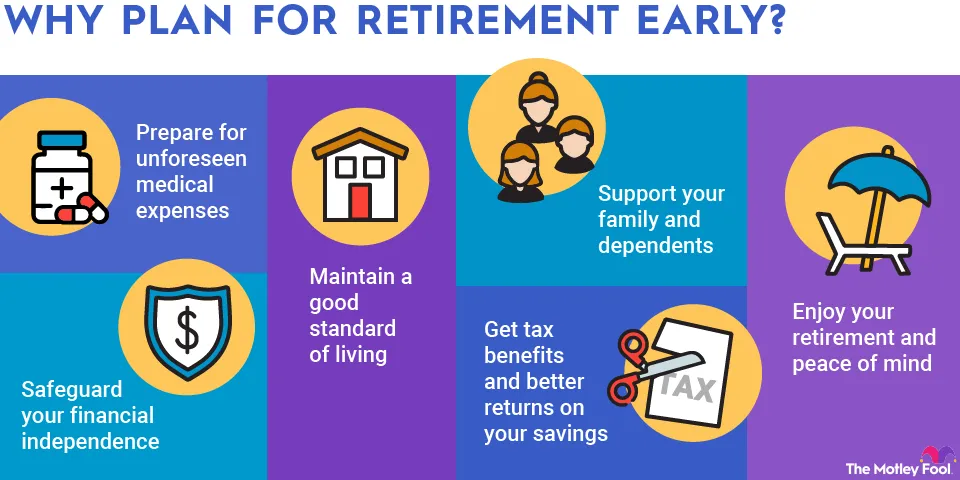
Starting retirement planning early is the smartest financial decision a young adult can make. With the power of compounding and disciplined investing, even modest contributions today can result in substantial wealth over decades.
In 2025, with evolving investment products, rising living costs, and changing retirement norms, young adults need a clear, actionable retirement strategy to ensure financial security.
Why Young Adults Should Start Retirement Planning Early
- Time is your greatest ally
The earlier you start, the longer your money has to grow through compounding interest. - Reduce financial pressure later
Starting early reduces the need for high contributions in midlife. - Take advantage of employer benefits
Many employers offer 401(k) matching or retirement contributions that should not be missed. - Develop disciplined financial habits
Early planning encourages budgeting, investing, and saving practices that last a lifetime.
Step 1: Assess Your Current Financial Situation
Before planning for retirement, understand your current financial picture:
- Monthly income and expenses
- Existing debt (student loans, credit cards, personal loans)
- Emergency fund status
- Current savings and investment accounts
Example: Personal Finance Snapshot
| Category | Amount | Notes |
|---|---|---|
| Monthly Income | $4,000 | Salary after tax |
| Monthly Expenses | $2,500 | Rent, bills, groceries |
| Savings | $5,000 | Emergency fund |
| Debt | $10,000 | Student loan |
Understanding your baseline helps set realistic retirement goals.
Step 2: Define Retirement Goals
Set clear goals:
- Desired retirement age
- Estimated retirement lifestyle
- Income needed per month/year
- Locations for retirement (housing costs vary)
Tip: Use realistic inflation assumptions. In 2025, experts suggest 3–4% annual inflation when projecting future expenses.
Step 3: Build an Emergency Fund
An emergency fund is essential before aggressive retirement planning. This prevents tapping into retirement accounts for unexpected expenses.
- Target: 3–6 months of essential expenses
- Keep funds in high-yield savings or money market accounts
Step 4: Understand Retirement Account Options
1. Employer-Sponsored Plans (401(k), 403(b), etc.)
- Contributions are often pre-tax
- Employer matching = free money
- Some plans allow Roth-style contributions for tax-free withdrawals
2. Individual Retirement Accounts (IRA)
- Traditional IRA: Tax-deductible contributions
- Roth IRA: Tax-free withdrawals at retirement
| Account Type | Contribution Limit (2025) | Tax Benefits | Notes |
|---|---|---|---|
| 401(k) | $22,500 | Pre-tax | Employer match optional |
| Roth 401(k) | $22,500 | Post-tax | Tax-free growth |
| IRA | $6,500 | Pre-tax or post-tax | Income limits may apply |
| Roth IRA | $6,500 | Post-tax | Tax-free growth, income limits |
Step 5: Take Advantage of Employer Matching
Employer matching is essential for maximizing retirement contributions:
- Contribute at least enough to get full match
- Free contributions = immediate 100% ROI
- Doesn’t count as “extra” saving — it’s money you would otherwise leave on the table
Step 6: Diversify Investments
Investments in retirement accounts should balance risk and growth potential:
- Stocks / Equity funds → Long-term growth, higher risk
- Bonds / Fixed income → Stability, lower risk
- Real estate / REITs → Portfolio diversification
- Index funds / ETFs → Low-cost, diversified exposure
Suggested Allocation for Young Adults (20s–30s)
| Asset Type | Allocation | Purpose |
|---|---|---|
| Stocks / Equity | 70% | Long-term growth |
| Bonds / Fixed income | 20% | Stability |
| Real Estate / REITs | 5% | Diversification |
| Cash / Money Market | 5% | Liquidity |
Step 7: Automate Savings
Automation ensures consistency and discipline:
- Set automatic contributions to 401(k) or IRA
- Increase contributions annually or with raises
- Automate transfers to taxable brokerage or savings accounts for additional investments
Step 8: Minimize Debt
High-interest debt (credit cards, personal loans) reduces your ability to save:
- Prioritize paying off high-interest debt first
- Avoid new unnecessary debt
- Use low-interest student loan repayment strategies if applicable
Step 9: Monitor and Adjust Investments
Young adults should review portfolios at least annually:
- Rebalance to maintain target allocation
- Increase contributions as income grows
- Adjust risk profile as retirement approaches
Step 10: Plan for Taxes
Tax efficiency improves long-term returns:
- Contribute to Roth accounts for tax-free withdrawals
- Use pre-tax accounts for current deductions
- Understand state taxes and retirement account implications
Power of Compounding
Starting early multiplies wealth:
- $500/month invested at 7% for 30 years → ~$528,000
- $500/month invested at 7% for 20 years → ~$247,000
Even small contributions grow exponentially with time.
Common Mistakes Young Adults Make
- Delaying contributions until “later”
- Overestimating risk tolerance and investing too aggressively
- Ignoring employer match
- Failing to budget for emergencies
- Reacting to market fluctuations emotionally
Smart Retirement Planning Tips Summary
| Tip | Action |
|---|---|
| Start Early | Contribute consistently |
| Employer Match | Maximize free contributions |
| Diversify | Balance growth and safety |
| Automate | Make contributions automatic |
| Monitor | Review and rebalance annually |
| Minimize Debt | Reduce interest payments |
| Budget Smartly | Track income, expenses, and savings |
FAQs
At what age should I start retirement planning?
The earlier, the better — ideally in your 20s.
How much should I contribute each month?
Experts suggest 15–20% of income, including employer match.
Can small contributions really make a difference?
Yes. Compounding growth over decades multiplies even small amounts.
What if I change jobs frequently?
Roll over 401(k)s to an IRA or new employer plan to maintain continuity.
Should I invest aggressively?
Yes, early-stage young adults can take higher equity risk for growth.
Related External Resources
- Investopedia – Retirement Planning for Young Adults
https://www.investopedia.com/retirement/retirement-planning-for-young-adults/ - Fidelity – Retirement Strategies for Early Savers
https://www.fidelity.com/viewpoints/retirement/retirement-planning-young-adults - Vanguard – Starting Early with Retirement Accounts
https://investor.vanguard.com/retirement/early-savings - Consumer Financial Protection Bureau – Retirement Planning Guidance
https://www.consumerfinance.gov/consumer-tools/retirement/ - MyFICO – How Credit and Saving Affect Retirement
https://www.myfico.com/credit-education/retirement-planning