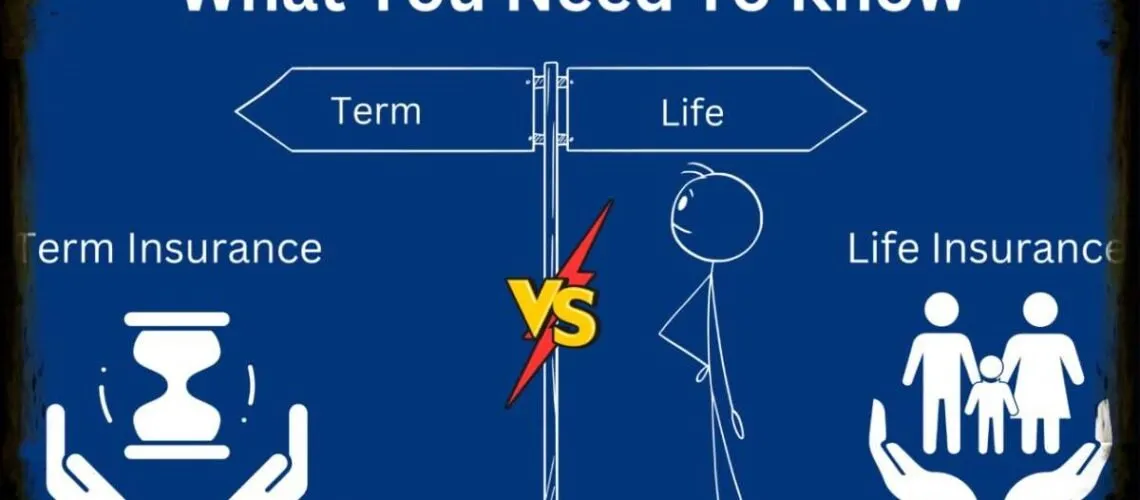
Choosing the right insurance is crucial for financial security and protecting your family’s future. Two of the most common types of insurance are life insurance and term insurance. Though sometimes used interchangeably, they serve different purposes and have unique features. This guide explains the differences, benefits, drawbacks, and how to choose the right plan.
What Is Life Insurance?
Life insurance is a contract between you and an insurance company. In exchange for paying regular premiums, the insurer pays a lump sum (death benefit) to your beneficiaries if you pass away.
Types of Life Insurance:
- Whole Life Insurance: Provides coverage for your entire life with a guaranteed death benefit.
- Universal Life Insurance: Flexible premiums and death benefits; part of the money can accumulate cash value.
- Variable Life Insurance: Invests part of the premiums in equities; higher risk and potentially higher returns.
Key Features:
- Coverage lasts for life
- Premiums are usually higher than term insurance
- Can include a cash value component that grows over time
What Is Term Insurance?
Term insurance is life insurance for a specific period (term), such as 10, 20, or 30 years.
Key Features:
- Pays a death benefit if you die during the term
- No cash value accumulation
- Generally lower premiums than whole life insurance
- Often used to cover financial obligations like mortgages or children’s education
Key Differences Between Life and Term Insurance
| Feature | Life Insurance | Term Insurance |
|---|---|---|
| Coverage Duration | Lifetime | Specific period (e.g., 10–30 years) |
| Premiums | Higher | Lower |
| Cash Value | Yes | No |
| Flexibility | Can adjust premiums and benefits (universal/variable) | Fixed coverage and premium |
| Ideal For | Long-term wealth planning, estate planning | Temporary financial protection, debt coverage |
| Investment Component | Yes (cash value growth) | No |
| Renewal | Not required; coverage lasts life | Needs renewal after term expires, often at higher cost |
Advantages of Life Insurance
- Lifetime Coverage: Provides protection for your entire life.
- Cash Value Component: Can borrow against it or withdraw for emergencies.
- Estate Planning: Helps in wealth transfer to heirs.
- Financial Security: Guarantees a death benefit regardless of when you pass away.
Advantages of Term Insurance
- Affordability: Lower premiums make it accessible for young earners.
- Simplicity: Easy to understand; straightforward death benefit.
- Focused Protection: Can cover debts, mortgages, and children’s education.
- Flexibility: Allows higher coverage for temporary needs without high costs.
How to Decide Which Is Right for You
Consider Your Goals
- Life Insurance: Best if you want lifetime protection, cash value growth, and estate planning.
- Term Insurance: Best if you want temporary coverage for debts, mortgage, or children’s expenses.
Consider Your Budget
- If affordability is crucial, term insurance is often better.
- If you can afford higher premiums, life insurance provides additional long-term benefits.
Life Stage Matters
- Young Adults: Term insurance often suffices to cover loans or family obligations.
- Middle-Aged Adults: Consider whole or universal life insurance for long-term protection and investment.
- Pre-Retirement: Evaluate cash value life insurance for estate planning and supplementing retirement income.
Example: Cost Comparison
| Age | Coverage | Term Insurance Premium | Whole Life Insurance Premium |
|---|---|---|---|
| 30 | $500,000 | $25/month | $250/month |
| 40 | $500,000 | $50/month | $400/month |
| 50 | $500,000 | $120/month | $600/month |
Note: Premiums vary by insurer, health status, and term length. Term insurance is significantly cheaper, especially at younger ages.
Common Mistakes to Avoid
- Choosing a policy based solely on price, not coverage needs.
- Ignoring inflation: Ensure death benefit keeps pace with future financial obligations.
- Not reviewing policies as life circumstances change (marriage, children, mortgage).
- Overestimating cash value benefits in life insurance without understanding growth terms.
- Relying on employer-provided insurance only—supplement with personal policies.
FAQs
Q: Can I convert term insurance to life insurance?
A: Many term plans allow conversion to whole or universal life insurance without a medical exam.
Q: Do term insurance policies pay out if I outlive the term?
A: No, term insurance only pays the death benefit if death occurs during the coverage term.
Q: Is life insurance an investment?
A: Some types (whole, universal, variable) have a cash value component, but life insurance is primarily for protection, not investment.
Q: How much coverage do I need?
A: Typically, 10–15 times your annual income for term insurance; adjust for debts, dependents, and long-term goals.
Q: Can premiums change over time?
A: Term insurance usually has fixed premiums during the term; life insurance premiums vary by policy type.
Related External Resources
- Investopedia – Life Insurance vs Term Insurance
https://www.investopedia.com/articles/pf/08/life-insurance-vs-term-insurance.asp - NerdWallet – How to Choose Life Insurance
https://www.nerdwallet.com/best/insurance/life-insurance - Forbes – Term vs Whole Life Insurance Explained
https://www.forbes.com/advisor/life-insurance/term-vs-whole-life-insurance/ - The Balance – Term and Permanent Life Insurance
https://www.thebalancemoney.com/term-life-vs-whole-life-insurance-5195863 - Policygenius – Life Insurance Guide
https://www.policygenius.com/life-insurance/